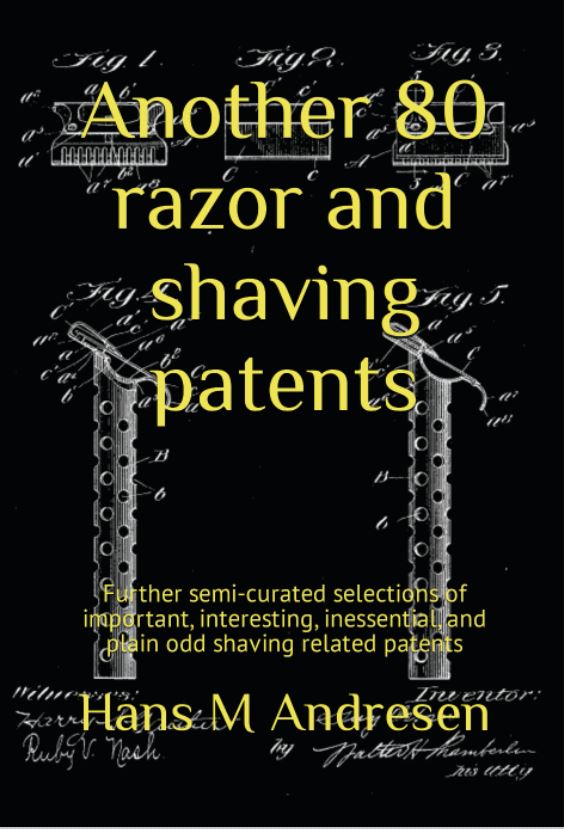
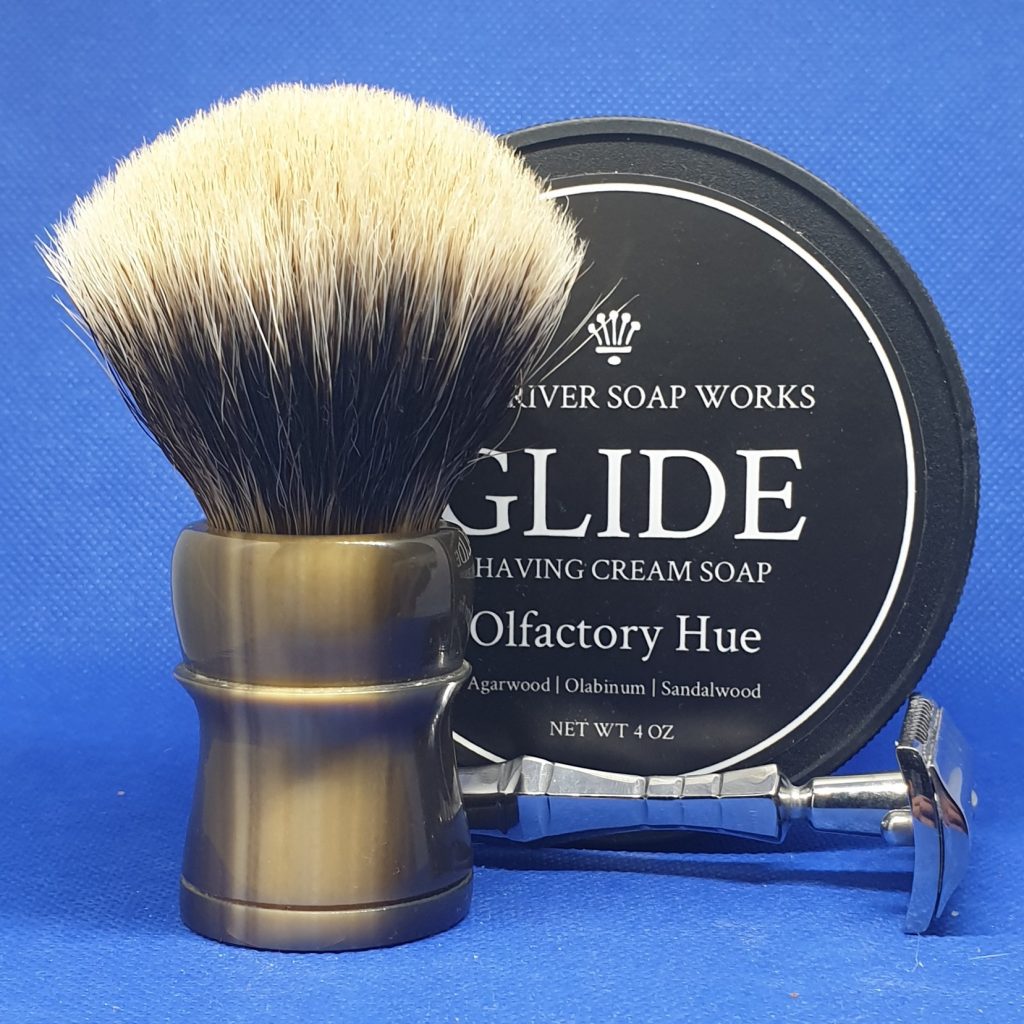
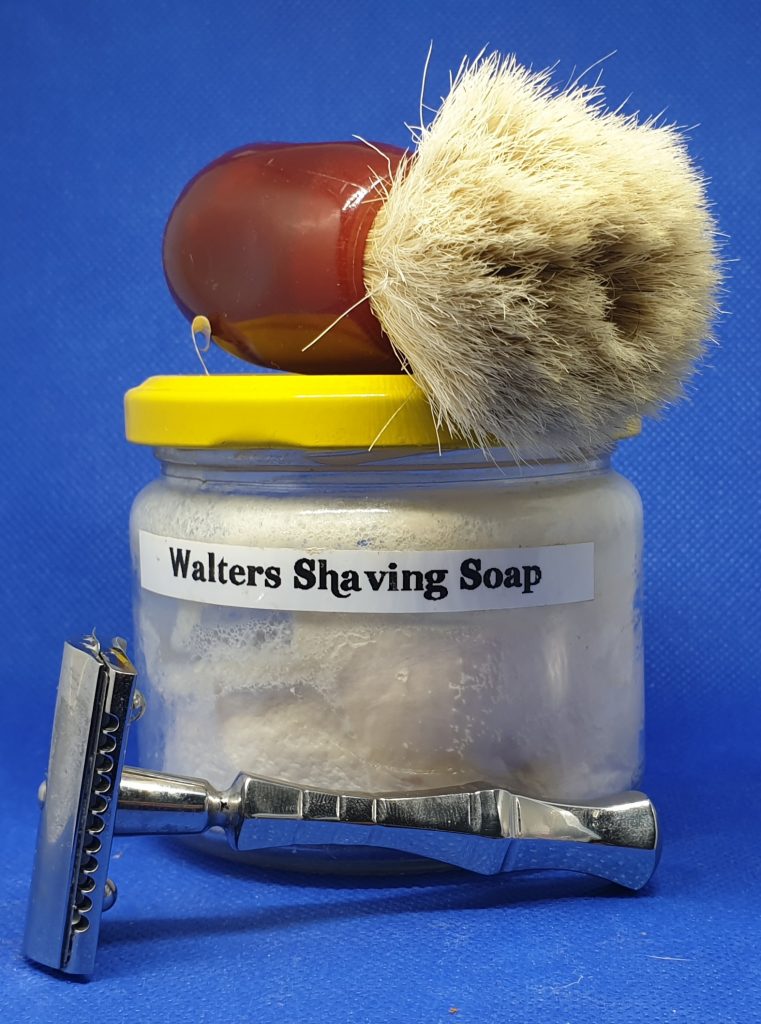
This year, I offer discounts on digital copies of my two books on shaving and razor patents.
Prices for both books will be reduced to just 99 US cents. That is 1.98 US dollars for both. A massive 80% discount!
And I do start the sale slightly early, so those of you who are too stuffed with turkey to do much beyond vegetating on the coach can at least read while you’re digesting.
Both books covers patents on both fondly remembered and thankfully forgotten razors and shaving accoutrements, these books are meandering journeys through shaving history.
The sale have now started, and will run until Monday 28th at 1600 UTC – so you have all weekend to pick up a Kinle copy of my books.
We’ve talked about razors that stretches the skin before. But I can do you one better today… It is a razor that stretches the skin and has a lubricant dispenser built in. And as a bonus it still looks like you can shave with it with it – unlike some patented razors I could mention. So what did William Miller get a patent for almost fifty years ago?
Once you have a razor, it must be stored between shaves. And while I’ve looked at a number of cabinets and othersolutions before, I think this is the first one made to keep your razor dry and corrosion free. Filed in ’71 by Jack Cobb, the apparatus for storing cutting implements looks sensible – and pointless.
Prairie Creations was one of the first artisans I bought from, about ten years ago. While she is no longer in business, the soap is as good today as it was then.
There is always someone who can’t manage to handle both a razor and a brush. This has lead to a largenumber of self-latheringrazors. So Saul Hackmyer was in good company when he filed a patent for a self-lathering razor in 1971.
Where he differed from most of the patents I’ve discussed before is that he designed his invention around canned goo. Or as the abstract puts it: