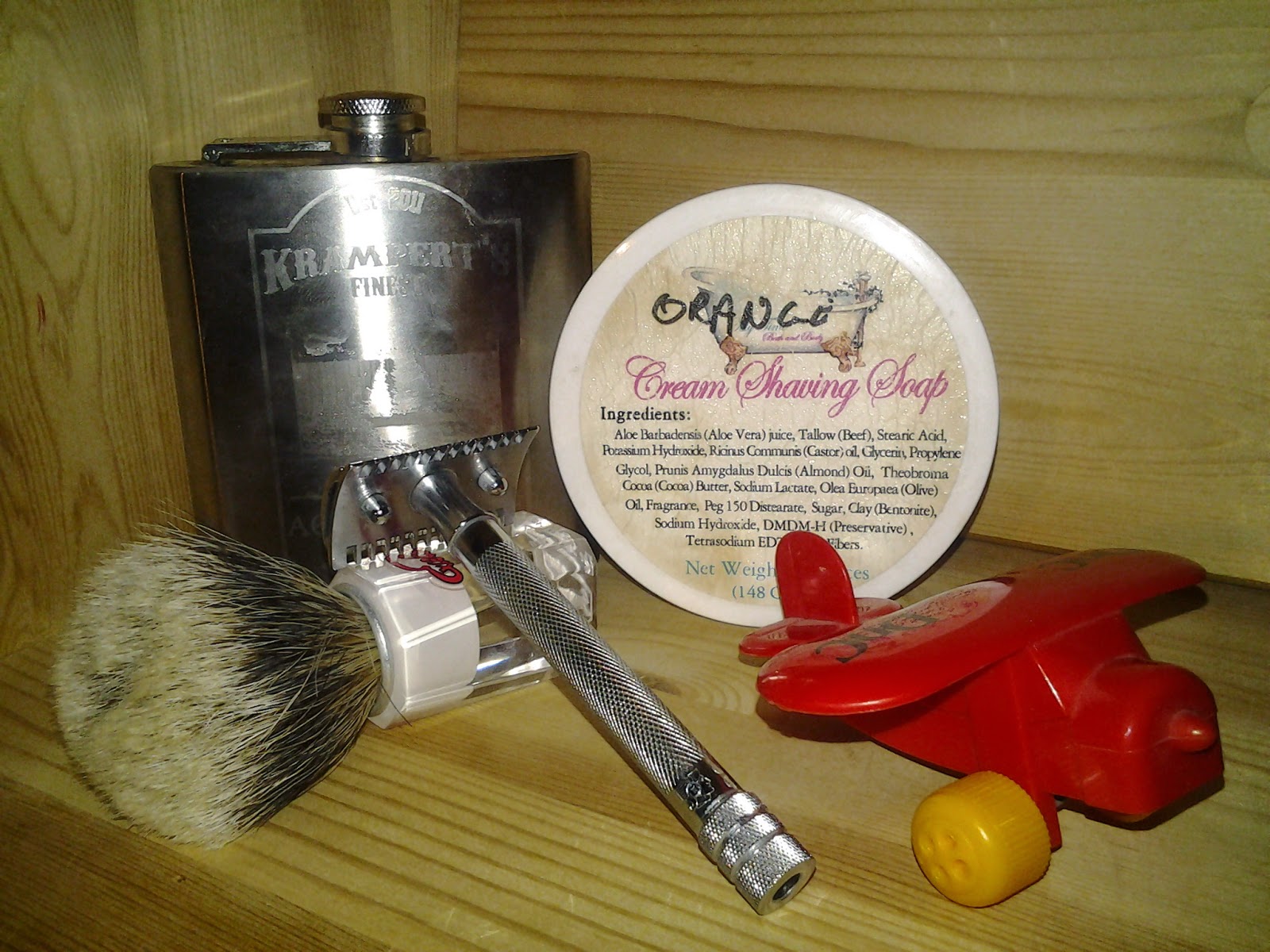
Shave of the day 13th October

Pre-shave: Arko shave stick (works well as a pre-shave soap too)
Lather: Arko shave stick
Brush: Semogue TSN 2012 LE mixed badger/boar
Razor: Merkur 25C Open Comb with an Astra Green
Post-shave: Cool water rinse and Proraso Liquid Cream Aftershave

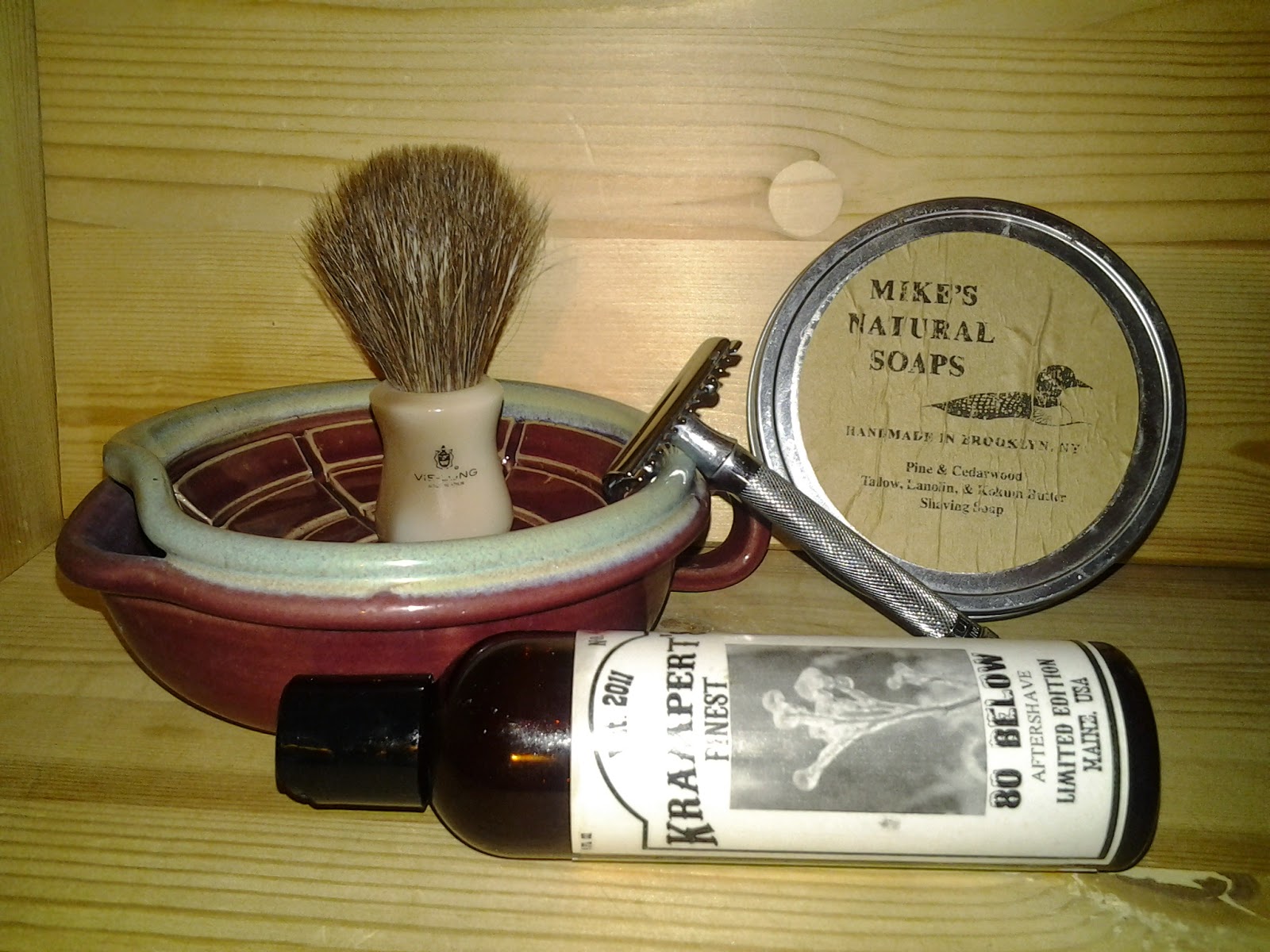
Shave of the day 10th October

Pre-shave: Dr Bronners Liquid Eucalyptus Soap
Lather: Mike’s Natural Pine & Cedarwood soap
Brush: Vie Long 13051M unbleached horse
Razor: Merkur 25C Open Comb with an Astra Green
Post-shave: Cool water rinse and Krampert’s Finest 80 Below

Wehrmacht razor

Inspired by my recent acquisition of a WW1 Gillette Khaki, I have looked at what other military razors there are out there… this is the standard issue German razor from WW2, spotted on ebay in it’s original packaging.

Overall, it looks rather similar to the Gillette Old and New… probably shaved much the same.

Shave of the day 8th October

Pre-shave: Dr Bronners Liquid Orange Soap
Lather: Orange EO shave croap
Brush: Semogue TSN 2012 LE
Razor: Merkur 25C Open Comb with a fresh Astra Green
Post-shave: Cool water rinse and Krampert’s Finest Bay Rum

Razor blade sharperners

Halfway continuing from my musings on how old razor shaved when new – that is, with the original specification blade – I have spent a little time looking at how to keep a carbon blade sharp. It turns out that back in the day there was a LOT of ingenuity put into how to make your precious blades ‘fresh’, which is more critical with carbon steel blades due to the process of micro-pitting.

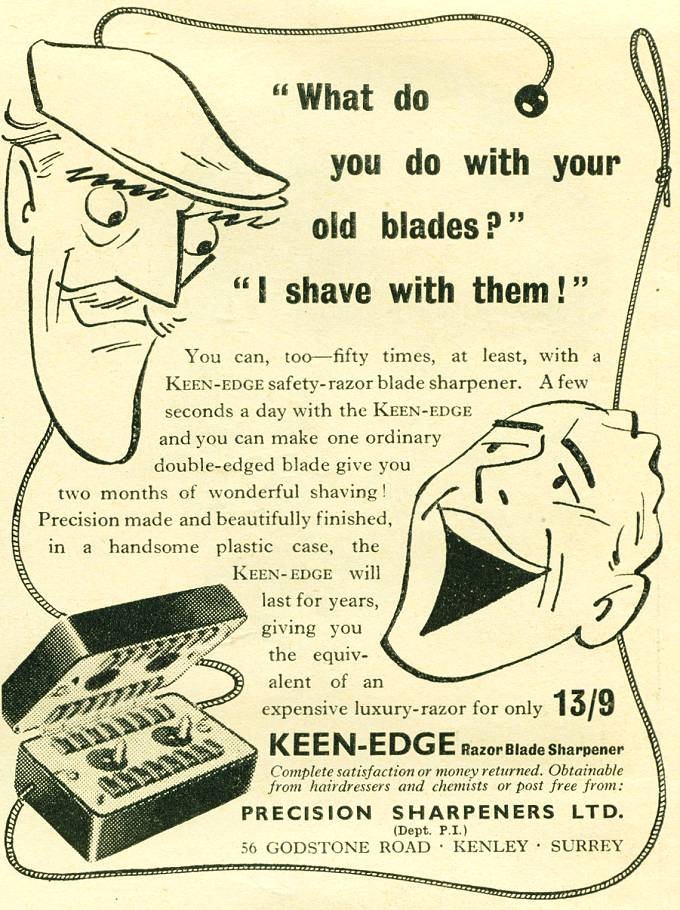
We may consider blades to be cheap today, but they cost comparatively more back in the old days

While I don’t usually take claims made in advertisements at face value, two months is a lot longer than the one week I use a blade before throwing it out… but then, part of the reason I throw them out is that I like to change things up. If you’re into traditional wetshaving to save money on the other hand, a blade sharpener makes a bit more sense – save money where you can.

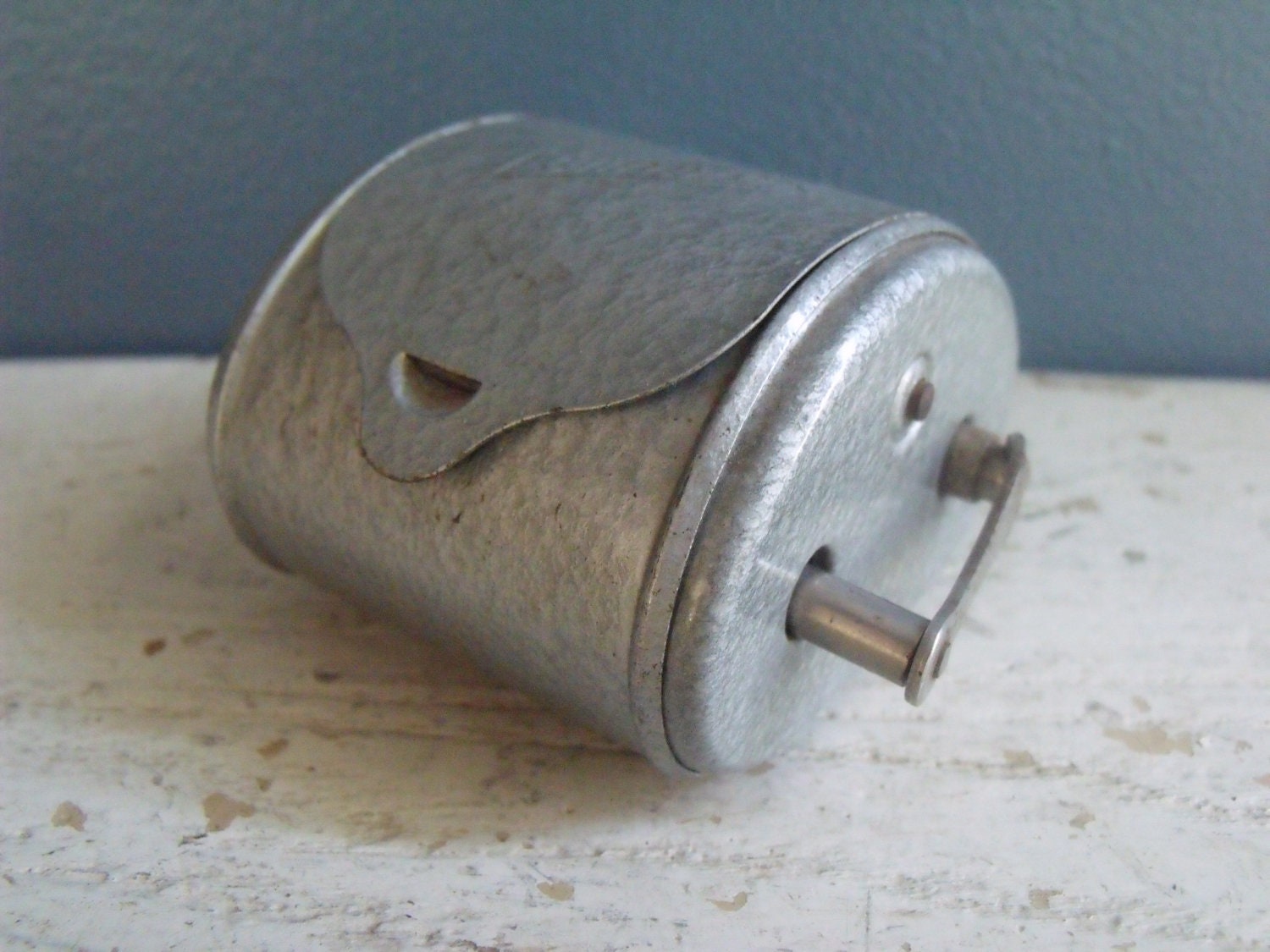
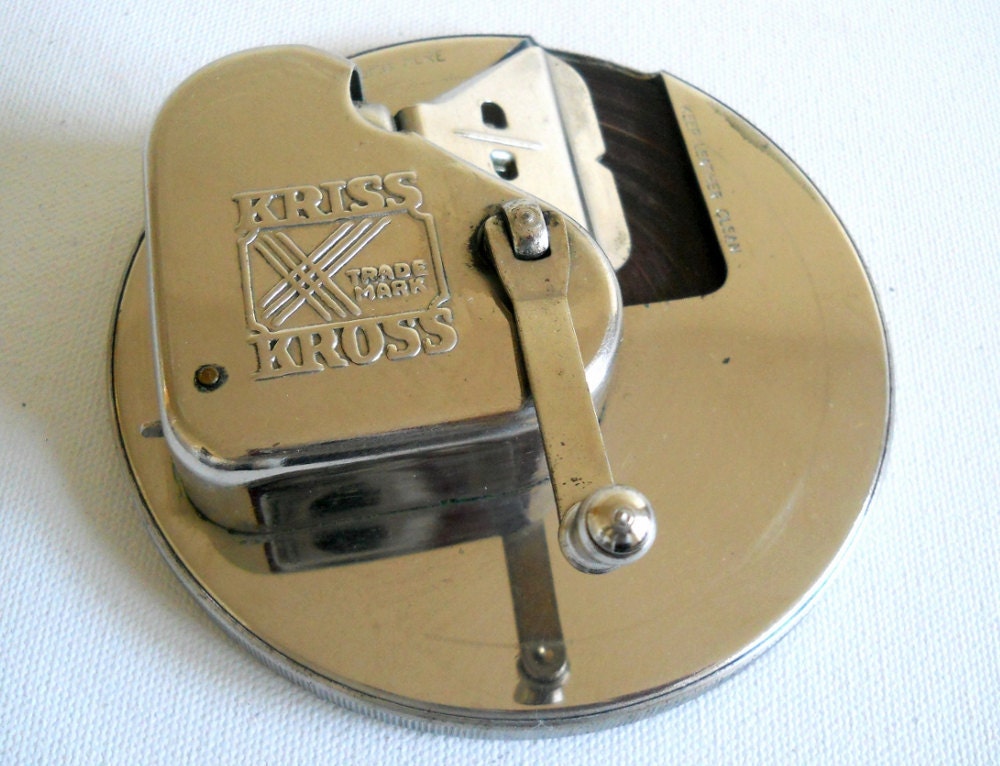
There were quite a few different models too, working on several different principles:

Place blade on eccentric mount, close lid, pull string – the edges will move in a circular motion over the hones.
These two seems to work on the principle of placing the blade in the middle, and turning the handle will grind the hones across the edges. The top one  flips the blades over on the inside, the bottom one has four hones.
This moves a SE blade against a disc shaped grinding stone… which has a neat mechanism to flip the blade over.
I found a video of how to use the “thing on a string”… seems fairly simple, and if it works as advertised it should be very handy if the shavecopalypse ever comes around.
Also found a video demonstrating the “wind up” TwinPlex sharpener.
And last, a long video with the SE-blade sharpener.  I also found one of of a guy using it for a DE blade, but that one was in a language I don’t understand…
While I’m not sure how useful – or even usable – these devices would be with a modern stainless blade, it is fun to see the ingenuity of yesteryears.

Shave of the day 6th October

Pre-shave: Hot water
Lather: Derby shave stick
Brush: BodyShop synthetic
Razor: Gillette “Khaki” with a fresh Permasharp
Post-shave: Cool water rinse and Krampert’s Finest Prototype Menthol

Shave of the day 3rd October

Pre-shave: Dr Bronner’s Liquid Orange Soap
Lather: Orange EO shave croap
Brush: Vie Long 14033 mixed badger/horse
Razor: Gillette “Khaki” with a Voskhod Teflon Coated
Post-shave: Cool water rinse, alum, and Krampert’s Finest Bay Rum

How did the old razors shave back then?

I been thinking again, and sometimes when I do that my brain gets stuck on questions I cant answer…

Given that the original Gillette blade was – among other differences – noticeable thicker and therefore more rigid than today’s blades, and that perceived blade aggressiveness is often linked to blade exposure and angle… would an old razor (like, say, a Gillette Old Type from 1918) shave and feel any different back then compared to these days?

King Gillette’s original patent do state the following:

The blade of my razors made of’ sheet steel having preferably a uniform thickness of about six one-thousandths of an inch.

Or in measures more easy to understand; 6/1000″ = 0.1524 mm.

A fair bit of digging online seems to indicate that modern blades are about 0.10 mm thick, or about 2/3rds as thick as the old blade – assuming, off course, that the original blade was as thick as the patent calls for. It’s hard to tell exactly when blades got thinner, but over on another forum I spotted one guy claiming that

[blades] became a lot thinner after that; I have seen blades from the 50’s and 60’s that went from 0.10 to 0.08 and even 0.06mm.

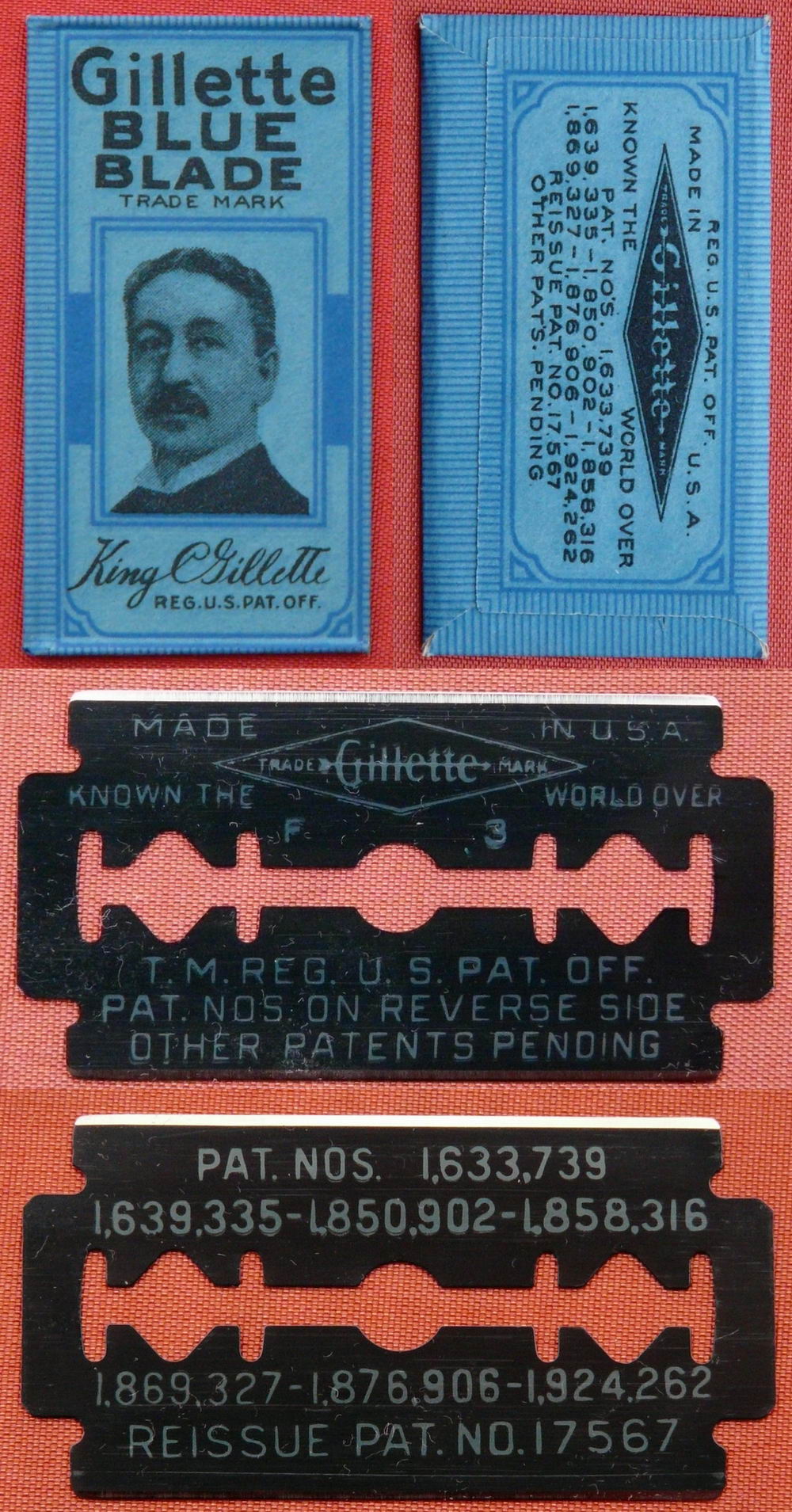
For all I know the increased thinness of the blades could have started sooner, the the modern shape and perforation of the DE blades seems to have appeared around 1930. Going by the patent numbers listed on a US Gillette Blue from 1935, it’s hard to tell… several references to “thin, flexible blade”, but nothing on just HOW thin it is.

When I raised this question on my favourite shave forum, the guy making my preferred aftershave pointed out that he likes SE razors due to their thicker, stiffer blades – which like DE blades used to be even thicker and therefore even stiffer – since they flexes less. I should probably get my callipers out to measure a new and old SE blade, just to see how pronounced the difference really is.

Stiffening of a blade can also be achieved by twisting it in a slant razor, and slants are often considered to be more “aggressive”… even if I personally don’t think my slants are aggressive, just efficient – perhaps aggressive is the wrong term, even if it’s commonly used to denote the opposite of a mild razor.

Making a number of wild assumptions, desperately pulling on what I learned in structural mechanics more than two decades ago, and hoping that this website have got their code right; the old blade ought to be twice as stiff as the current blades – with the biggest caveat being that the modulus of elasticity is the same for the steels used.

These guys offers three hole blades that are a dimensional match for the pre-1929 Gillette blade… and it seems that one of the thickness’s they offer match the old blades. But the blades are made for cutting plastic film, so they will probably be rotten for shaving with.

After all that searching and math, I still have no real idea how a blade twice as stiff would affect the behaviour of an Old Style Gillette… Combining what what we know about SE razors and their stiffer blades with what we know about the torsionally stiffened blades in slants, I’m leaning towards the idea that the Old Type Gillettes using the pre-1929 blades may have been more aggressive than they are with the thinner blades of today.

I may be wrong though, with all the assumptions and guestimates underpinning that idea.

Shave of the day 1st October

Pre-shave: Dr Bronner’s Liquid Orange Soap
Lather: Arko shave stick
Brush: BodyShop synthetic
Razor: Gillette “Khaki” with a Voskhod Teflon Coated
Post-shave: Cool water rinse, alum, and Thayers Original Witch Hazel

Old style DE blades

This week I’m trying out my ‘new’ razor – the Gillette “Khaki” Old Type – and is so far quite enjoying the experience.

The blade I’m using is rather different both in alloy and in shape from what the US Doughboys would have tucked away in their dopp bag as they were deposited into the maelstrom of mud and horrors that were the trenches of the great war…

The alloy was mild carbon steel, and there was three more-or-less circular holes. The old school blades were also thicker than the blades used now, which probably to some extent affects the perceived aggressiveness of old razors by dint of altering the blade angle slightly.

Today’s blades are commonly made out of stainless steel, and have a single elongated hole shaped to fill all DE razors (not just the three piece razors).