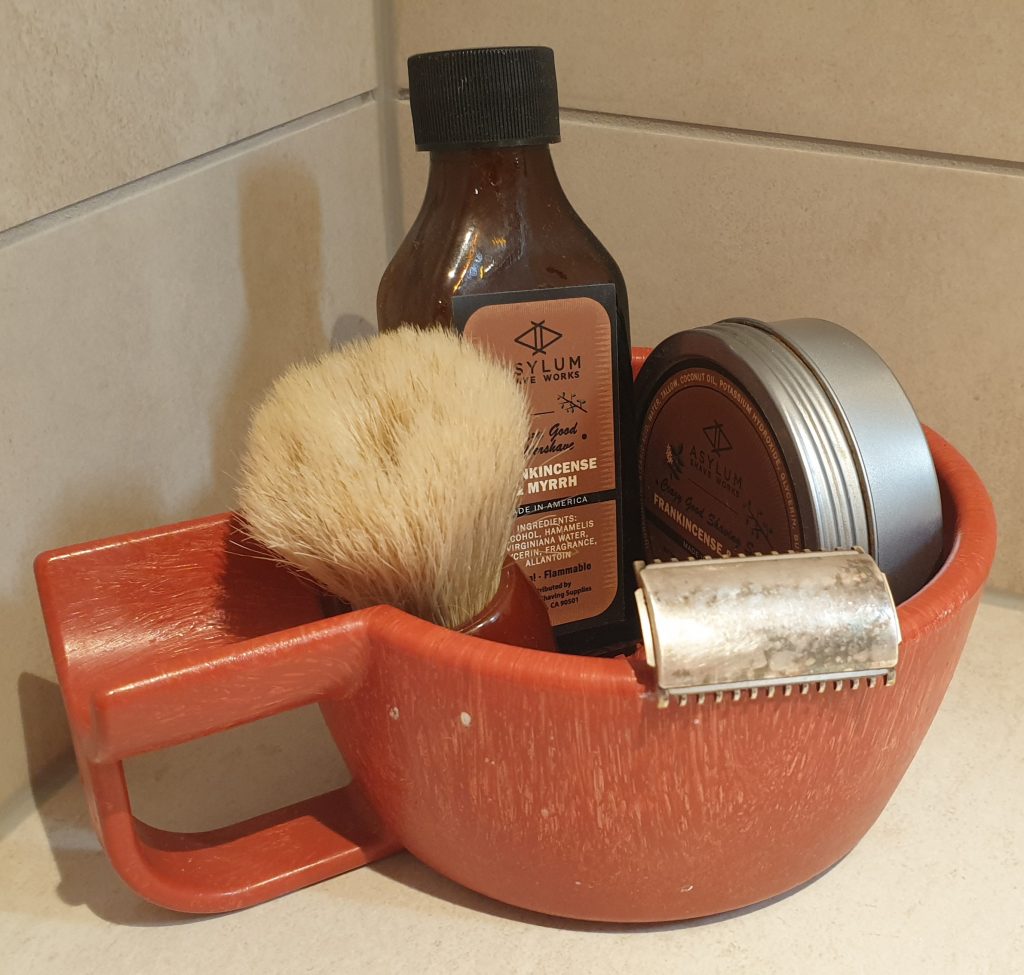
That perfect moment caught between lather and blade; the little breathing space where it's you, your razor and perfection.
Wetshaver, approximate wood worker, career military, blogger, avid reader
If you ask the average person around where I live what Colgate makes, the answer will be toothpaste. A hundred and eleven years ago the answer might have been shaving cream. Or shaving powder. Or even shaving stick – Colgate did all three according to this 1912 advertisment.
Recently I’ve been enduring a major bathroom renovation. As in tearing the bathrooms down to studs and redoing everything – pipes, wiring, walls, the works. Which was needed – the old waste water pipes were cast iron and almost rusted out – but still left me shaving out of the GoBag for several weeks.
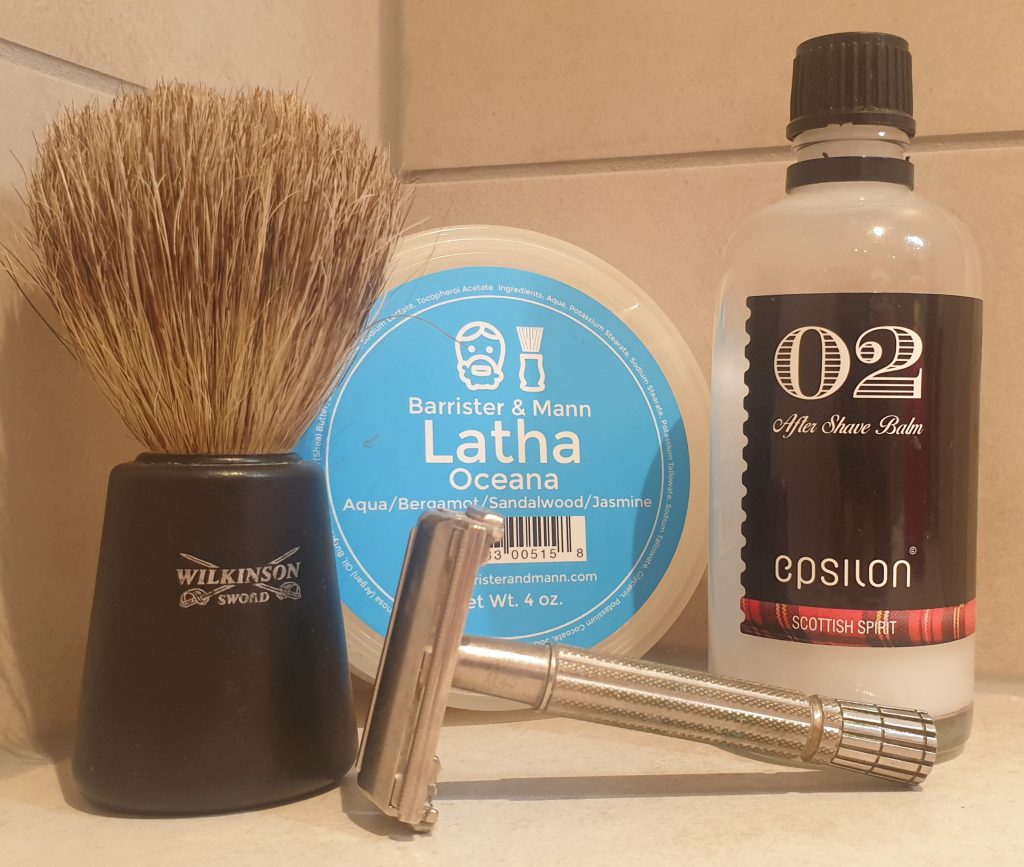
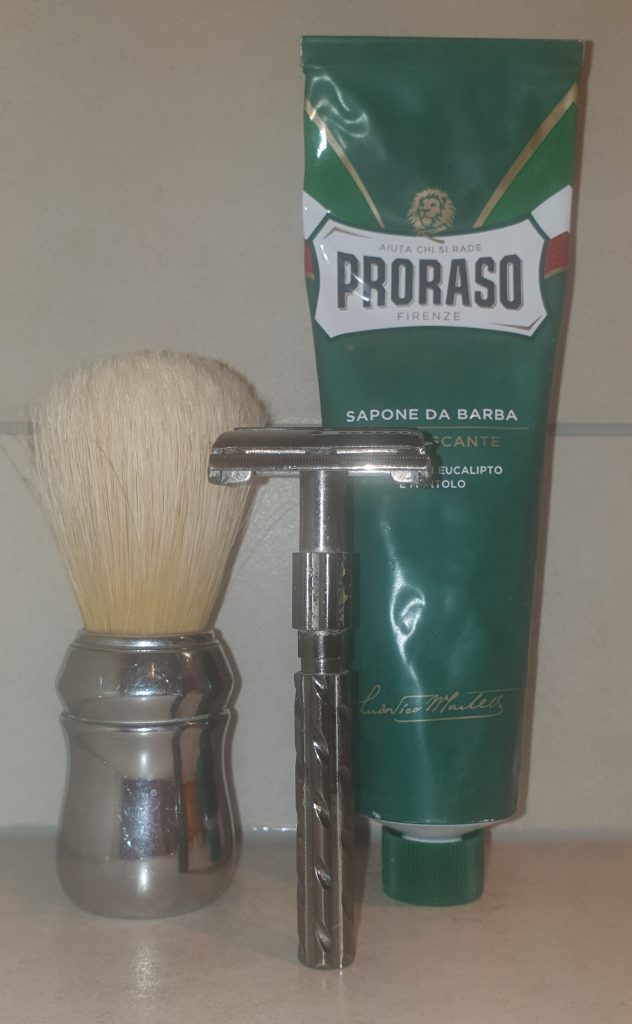
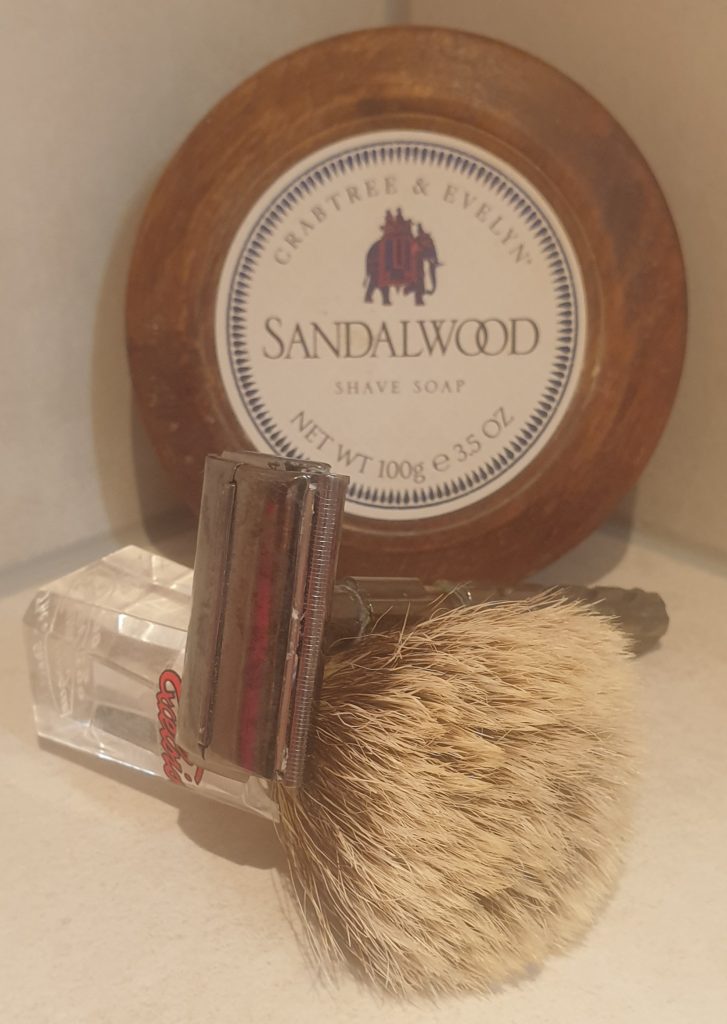
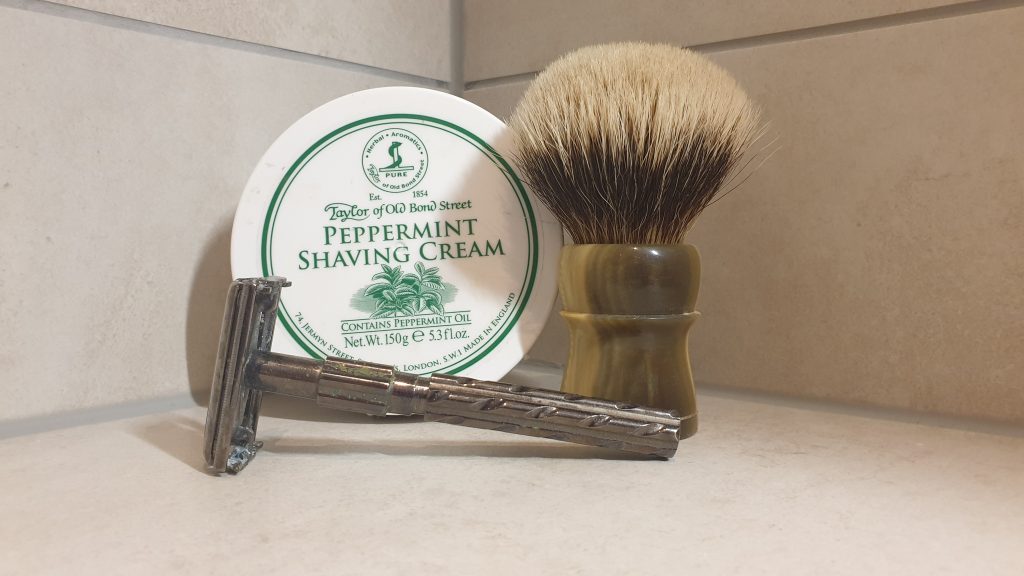
Now, I do change out what goes in the GoBag ever so often. But even so it is a limited palette. Doubly so when comparing to the fairly big rotation I normally have – 25+ razors, sevenish brushes, and I don’t even want to count how many soaps and creams. But, to harp on the point, for several weeks my palette was a single razor, a single brush, and two soaps. Oh, and an aftershave and a preshave.
In 1887, Mr Arthur Henry Wallace of Houghton, Michigan came up with what he described as a new and useful improvement in shaving apparatus. And by shaving apparatus, Wallace clearly meant a doodad to hold and heat a brush.
Wallace’s doohickey was compact enough to be carried in a pocket or stowed away in a satchel. It would, he claimed, fulfil all the requirements for which it is intended. As long as the requirements is limited to forming a water reservoir, having a lamp to heat it, and having a built in shaving brush that wouldn’t touch the table when you put it down…
At about the same time as the original Gillette safety razors were offered for sale, Henrie Clauss filed a patent for a spring loaded hoe razor. It was a reasonable straight forward razor, using a single edged Christy-style blade. So let us have a look at what made it stand out from the crowd.
Like so many razor patents, the patent text describes the invention as containing “new and useful improvements”. And while it might have been novel – or at least novel enough for a patent – I’m unsure of the usefulness.